
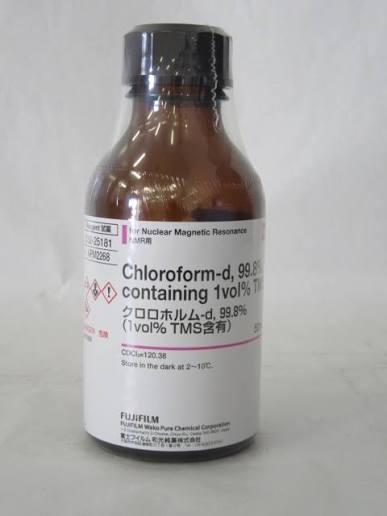
Chloroform-d (CDCl₃) vs. DMSO-d₆: The Ultimate NMR Solvent Guide
Firstly, Bulk Chloroform-d suppliers wholesale Australia, In the field of organic synthesis and molecular characterization, Nuclear Magnetic Resonance (NMR) spectroscopy is the premier tool for structure elucidation. To prevent the massive proton signals of standard solvents from overwhelming the fragile signals of a sample, analytical chemists rely on deuterated solvents. Among these, Chloroform-d (CDCl₃) and Dimethyl Sulfoxide-d₆ (DMSO-d₆) are the two most heavily utilized NMR solvents in the world.
In this comprehensive guide, we compare the chemical profiles of CDCl₃ and DMSO-d₆, detail their unique solvent residual peaks, and establish an optimal selection framework for your laboratory workflows.
Why Deuterated Solvents? The Role of Deuterium Locking
Secondly, Standard solvents are rich in Protium (¹H), which produces a signal so large it blinds the NMR spectrometer’s detector. Replacing these hydrogen atoms with Deuterium (²H or D) effectively renders the solvent “invisible” in standard ¹H-NMR experiments. Furthermore, modern NMR spectrometers use the constant, sharp deuterium frequency of the solvent as a reference point—a process known as deuterium locking—to compensate for natural drifts in the instrument’s magnetic field.
Bulk Chloroform-d suppliers wholesale Australia, Buy deuterated solvents online NSW, High purity DMSO-d6 for sale Queensland,Victoria,Melbourne,Sydney,Perth
Head-to-Head Comparison: Physical & Spectroscopic Properties
Choosing between Chloroform-d and Dimethyl Sulfoxide-d₆ depends heavily on your analyte’s solubility, melting thresholds, and the presence of exchangeable protons:
| Property / Feature | Chloroform-d (CDCl₃) | Dimethyl Sulfoxide-d₆ (DMSO-d₆) |
|---|---|---|
| Chemical Structure | CDCl₃ | \(\text{(CD}_3)_2\text{SO}\) |
| Solvent Polarity | Non-polar / Low polarity. | Highly polar, aprotic solvent. |
| Residual ¹H Chemical Shift | 7.26 ppm (singlet) | 2.50 ppm (quintet) |
| Residual ¹³C Chemical Shift | 77.16 ppm (triplet) | 39.52 ppm (heptet) |
| Water Peak Position (¹H) | ~1.56 ppm | ~3.33 ppm |
| Boiling / Melting Points | BP: 61.2°C | MP: -63.5°C | BP: 189°C | MP: 18.5°C (Freezes near room temp) |
| Analyte Solubility Profile | Excellent for non-polar organics, lipids, small molecules, and oils. | Dissolves difficult polar molecules, polymers, salts, peptides, and biomolecules. |
When to Choose Chloroform-d (CDCl₃)
CDCl₃ is the absolute default solvent for routine organic chemistry.
- Rapid Evaporation: Its low boiling point makes sample recovery incredibly straightforward via standard rotary evaporation.
- Low Cost: It is by far the most economical deuterated solvent on the market.
- Acidic Caution: Over time, exposure to light and oxygen causes CDCl₃ to degrade into trace amounts of hydrochloric acid (HCl) and phosgene. For acid-sensitive samples, the solvent must be stored over silver foil or passed through a small plug of basic alumina right before preparation.
When to Choose Dimethyl Sulfoxide-d₆ (DMSO-d₆)
DMSO-d₆ is a heavy-duty solvent reserved for more complex molecular architectures.
- The “Universal” Dissolver: If a synthetic compound refuses to dissolve in chloroform, ether, or water, it will almost certainly dissolve in DMSO-d₆.
- High Thermal Stability: With a boiling point of 189°C, it is ideal for high-temperature variable NMR studies designed to observe dynamic conformational changes or dissolve stubborn polymers.
- The Moisture Trap: DMSO-d₆ is intensely hygroscopic. It rapidly pulls water moisture out of the air, leading to a massive water spike at 3.33 ppm that can suppress adjacent sample peaks. Always handle it using airtight syringes, anhydrous techniques, or purchase it in single-use sealed glass ampoules.
Bulk Chloroform-d suppliers wholesale Australia, Buy deuterated solvents online NSW, High purity DMSO-d6 for sale Queensland,Victoria,Melbourne,Sydney,Perth


