The Ultimate Guide to Pokémon Cards: Collecting, Investing, and Rarity Factors
Firstly, Buy Pokémon cards in Germany, Since their debut in 1996, Pokémon Trading Card Game (TCG) cards have evolved from a playground pastime into a multi-billion-dollar global asset class. Today, the hobby spans across millions of active competitive tabletop players and high-end alternative investors tracking rare, six-figure vintage holofoil cards.
Whether you are a casual fan digging through a childhood binder or a meticulous collector aiming for a flawless graded card, understanding the core dynamics of the Pokémon TCG market is essential.
How to Determine a Pokémon Card’s Value and Rarity
Evaluating a Pokémon card requires analyzing specific visual and structural markers printed on the card itself. Collectors use these indicators to separate bulk cards from rare collectibles.
- Rarity Symbols (The Bottom Corner): Check the bottom-right or bottom-left corner of the card. A Circle indicates a common card; a Diamond means uncommon; and a Star denotes a rare card. Specialized stars (like white, gold, or triple stars) indicate ultra-rare, secret rare, or illustration rare variants.
- Card Numbering (Secret Rares): Every set has an official card count (e.g., 150/198). If the card number exceeds the denominator (e.g., 210/198), it is a Secret Rare. These feature unique alternate artwork, textures, or gold-bordered designs.
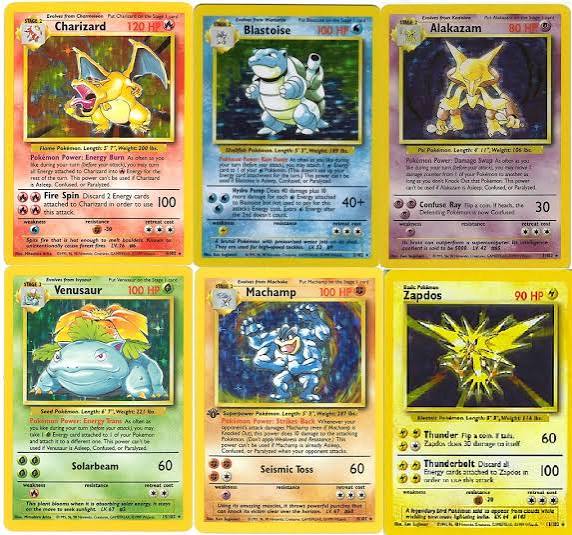
- The Holofoil Finish: Cards featuring a metallic, reflective foil layer over the artwork are highly prized. Variations include standard Holofoils, Reverse Holos (where the entire card face except the artwork is shiny), and complex textured Full-Arts.
The Anatomy of Pokémon Card Variants
Over the generations, The Pokémon Company has introduced specific mechanical and aesthetic card archetypes to keep the game and collecting experience fresh.
Vintage Grails (1999–2000s)
- 1st Edition Base Set: The ultimate collector status. Marked by a small “1st Edition” stamp below the left side of the artwork frame.
- Shadowless Cards: Early print runs of the English Base Set that lack the dark, drop-shadow visual effect on the right border of the artwork window.
Modern Ultra Rares (2016–Present)
- Pokémon ex, V, VMAX, and VSTAR: Modern gameplay powerhouses that feature full-bleed artwork stretching across the entire card border.
- Illustration Rares (IR) and Special Illustration Rares (SIR): Introduced heavily in the Scarlet & Violet era, these cards prioritize breathtaking, story-driven artistic depictions of Pokémon over traditional action poses.
Pokémon Card Eras and Generations
| TCG Era | Corresponding Video Game Generation | Key Mechanics / Cards to Watch |
|---|---|---|
| Base / Wizards of the Coast (WOTC) | Gen 1 (Red/Blue/Yellow) | 1st Edition Charizard, Blastoise, Venusaur; Holo Jungles & Fossils. |
| EX / Diamond & Pearl | Gen 3 & 4 (Ruby/Sapphire, Diamond/Pearl) | Gold Star Pokémon, EX variants, Level X cards. |
| Sword & Shield | Gen 8 (Sword & Shield) | Alternate Arts (Alt Arts), Charizard VMAX, Umbreon VMAX (Alternate Art Secret). |
| Scarlet & Violet | Gen 9 (Scarlet & Violet) | Pokémon ex, Special Illustration Rares, Gold etched cards. |
The Crucial Role of Professional Card Grading (PSA, BGS, CGC)
To maximize the financial valuation of high-end Pokémon cards, third-party authentication and physical grading are critical. Companies like PSA (Professional Sports Authenticator), Beckett (BGS), and CGC Cards evaluate a card’s condition on a strict 1-to-10 scale.
A card’s final grade depends heavily on four major physical parameters:
- Centering: How perfectly aligned the front and back card images are within the yellow or silver borders.
- Corners: The condition of the four card corners; they must be perfectly rounded without any fraying, chipping, or white paper exposure.
- Edges: Checking the sides of the card for minor nicks, silvering, or rough cuts from the factory.
- Surface: Inspecting the card under direct light and magnification for micro-scratches, dents, stains, printing lines, or fading.
How to Spot Counterfeit Pokémon Cards
As market values have climbed, the market has seen an influx of counterfeit cards. Use these quick tests to verify authenticity:
- The Texture Test: Authentic modern ultra-rare cards (like Special Illustration Rares or Full Arts) have fine, fingerprint-like ridges etched into the surface. Counterfeits are typically completely smooth and glossy.
- The Light Test: Genuine Pokémon cards are constructed by sandwiching a thin, opaque sheet between two layers of paper. Pass a bright phone flashlight through the card; if the light easily pierces through and illuminates the artwork on the other side, it is likely a fake.
- Font and Spelling Precision: Counterfeiters frequently use incorrect, thin fonts or misspell attacks, stats, and names. Always cross-reference text formatting with official card database images.
Buy Pokémon cards in Germany,Where to buy Pokémon booster boxes near Canada,Best local card shop UK,Pokémon TCG store Brazil,TCG shop France,USA,Mexio,Japan